

When Should You Weigh Your Garage Door?
Garage door weight plays an important role in how smoothly and safely your door operates. It helps determine whether your springs, cables and opener are properly matched to the system. Federal safety regulations also require garage door operator manuals to include safety warnings and instructions for properly counterbalancing the door.
Whether you’re replacing worn springs or addressing performance issues, knowing the door’s weight can help you select the right parts. A Better Door Co., Inc helps Long Island homeowners understand when and why door weight matters.
Why Knowing Your Garage Door’s Weight Matters
Your garage door relies on precisely calibrated springs and cables to counterbalance its weight. When garage door torsion springs are incorrectly matched, the system can become harder to control. Springs that are too weak may wear out faster, while springs that are too strong can make the door move unpredictably.
A poorly balanced door can also strain the opener, cables and other hardware. Having your garage door accurately weighed helps you choose parts that support safer, smoother operation.
When to Factor Weight Into Garage Door Service
Knowing when to check your garage door weight helps you avoid costly repairs and safety issues, such as:
- Spring replacement: Garage door torsion springs are rated by weight, and choosing the wrong spring can lead to repairs sooner than necessary.
- Cable replacement: Cables work with the spring system to lift and lower the door, and worn or mismatched cables can lead to unsafe operation.
- New door installation: This is a key moment to weigh your garage door. Manufacturer estimates don’t account for windows, insulation or decorative hardware.
- Performance issues: Doors that feel heavy, move sluggishly or open unevenly often signal weight mismatches.
How Professionals Weigh a Garage Door Safely
Because garage door weight, spring tension and balance are closely connected, the safest option is to have a professional weigh the door. During a professional appointment, a technician may check the door system, disconnect the opener as needed, position the door safely and use a scale rated for the door’s weight.
A technician may also assess how the springs, cables and opener are working together before recommending replacement parts. Since torsion springs are under extreme tension, homeowners should not attempt to release or adjust them on their own.
Professional weighing helps ensure the reading is accurate and the door stays properly supported throughout the process. Contact A Better Door Co., Inc for help weighing your garage door and choosing the right parts for your system.
Risks of Neglecting Garage Door Weight
Overlooking your door’s weight can lead to avoidable repair issues. Overloaded springs can wear out sooner than expected. Repair costs can also add up quickly when the door continues operating with the wrong parts.
Why Choose A Better Door Co., Inc?
Founded in 1988, A Better Door Co., Inc offers decades of specialized experience. Here’s what Long Island homeowners can expect from our team:
- Premium Clopay® doors: We install high-quality residential Clopay garage doors and pair them with reliable LiftMaster® openers, including options with Wi-Fi connectivity and battery backup.
- Better Business Bureau accreditation: Our commitment to quality and service has earned BBB accreditation, so you can trust us with your doors.
- EZDoor™ visualization tool: See how different garage doors could look on your home before making your final decision.
- Professional service: Count on us for installation, maintenance and prompt repair services.
- Family-owned operation: We treat every client like family with personalized service and support.
Get Help From Garage Door Experts Today
Understanding when to weigh your garage door can save time, money and reduce potential hazards. Whether you’re planning garage door spring replacements, garage door cable replacements or installing a new door, A Better Door Co., Inc ensures Long Island homeowners get it right.
Visit our showroom in Center Moriches or call 631-732-9654.
Frequently Asked Questions
Here are answers to common questions about weighing a garage door.
How much does a typical garage door weigh?
Garage door weight can vary widely depending on the door’s size, material, insulation, windows and hardware. Many residential doors weigh hundreds of pounds, so direct measurement is the most accurate way to determine your door’s weight. We can weigh doors during professional service visits.
Can I weigh my garage door without disconnecting the springs?
Because spring tension affects the door’s balance, professional service is the safest way to get an accurate reading.
What happens if I install the wrong spring?
Springs that are too weak for your door may wear out sooner, while springs that are too strong can affect how the door opens and closes. Both issues can compromise safety and lead to costly repairs.
Garage Door Cable Maintenance & Replacement Guide
Garage Door Cable Maintenance and Replacement Guide
A broken garage door can be inconvenient, but more importantly, it can pose a safety hazard. Your garage door contains many parts that work together to lift the whole system. Garage door cables are critical components that lift and lower the door safely. Problems with these cables can cause issues for the entire door.
One of the essential pieces to your garage door opener is the cables. Maintaining and replacing garage door cables is critical to the smooth operation of your door.
Regular garage door cable maintenance and timely replacement are essential for preventing serious problems and ensuring smooth operation. This garage door cable guide will walk you through everything you need to know about cable upkeep, garage door cable repair, and when it’s time to call a professional.
Understanding Garage Door Cables
Garage door cables are vital components that work with the spring systems to lift and lower your door. They bear the door’s weight, allowing the garage door opener to move it effortlessly. The springs transfer energy to the cables. The cables, located on each side of the garage door, then pull the door up or lower it. There are two types of cables based on different spring systems:
- Torsion springs: The torsion springs store energy by coiling. When the spring transfers energy to a drum, the drum uncoils the cables to lower the garage door. The cables recoil when the door lifts.
- Extension springs: Extension springs store energy by extending. They run parallel to the garage floor, and they extend when the door closes to recharge. They have a pulley that contains a cable, which does the lifting or lowering of the door.
The steel cables are located on both sides of the door and connect to either torsion or extension spring systems. In torsion systems, the cables wrap around drums that turn as the springs wind up. In extension spring systems, the cables are attached to the bottom brackets and run through pulleys, which lift and lower the door.
Why Does Garage Door Cable Maintenance Matter?
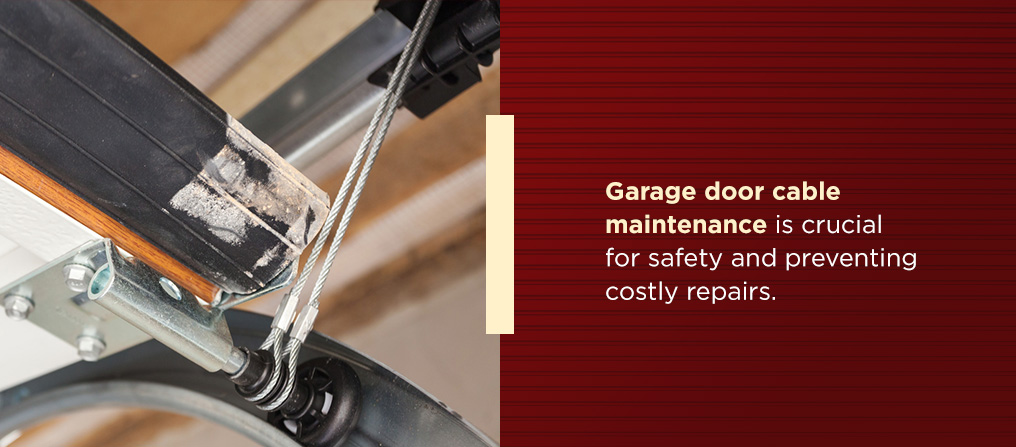
Garage door cable maintenance is crucial for safety and preventing costly repairs. Since cables lift your heavy garage door, they are susceptible to wear and tear that can lead to snapping, causing the door to fall unexpectedly.
It’s important to regularly check for fraying, kinks and proper tension to make sure the door operates properly. Routine upkeep allows you to identify and address issues early to avoid more extensive damage to the door, springs and opener. It helps you save on costs in the long run and extends the lifespan of your garage doors. This also prevents accidents.
How to Maintain Garage Door Cables
Maintenance is one of the best ways to keep your door functioning optimally. To make sure your cables are in good condition, you should:
- Use lubricant sparingly because cables can accumulate dirt.
- Examine your cables for fraying and kinks.
- Ensure you keep your cables clean of dirt, grime and other particles over time.
- If you have extension springs, check your pulleys for wear and tear.
When to Replace Garage Door Cables
You may be wondering when you should replace garage door cables. The lifespan of your lines will depend on their quality. It’s a good idea to examine them once a year. Cables carry a heavy responsibility, and sometimes malfunctions happen. Consider opting for garage door cable replacement if:
- A cable has snapped or broken.
- There is unbalanced tension between the cables on each side of the garage door.
- The cables are unwound.
- The cables are fraying.
While some people attempt to replace a garage door cable or reattach their garage door cables on their own, doing so can be difficult and dangerous. Incorrectly installing them could lead to problems later on, too. It’s best to get your garage door cables replaced by a professional.
Contact A Better Door Co., Inc for Garage Door Maintenance Services
Your garage door depends on quality replacement work. For reliable cable replacement and other services you can trust, contact A Better Door Co., Inc. We have decades of experience serving homeowners in the Long Island area, specifically Nassau and Suffolk counties. Our dedicated team is prepared to service your home.
To get started, fill out a contact form or request an estimate today!
How to Prepare Your Garage Door for Winter
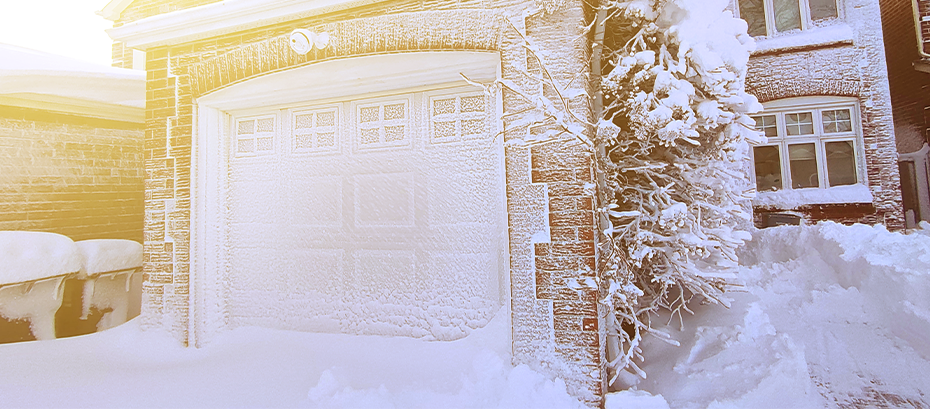
How to Prep Your Garage Door for Winter
You understand the importance of cleaning your gutters and caring for your lawn as seasons change, but did you know you should also winterize your garage door? It’s easy to overlook, but it’s crucial to prevent damage and extend the door’s lifespan.
A Better Door Co., Inc. can help you with all your garage door winterization needs. Here’s a look at why and how to prepare residential and commercial garage doors for winter.
The Impact of Cold on Residential and Commercial Garage Doors
Even the best garage doors for cold weather need a quick checkup before winter. Your garage door mechanisms mostly consist of metal, which contracts and can become hard in the cold. When springs contract and firm up, opening and closing the door could strain them more than normal.
Frost can also lead to moisture buildup, potentially causing corrosion that can damage cables, springs or other metal parts. The cold air can also dry out lubricants that normally minimize friction and prevent damage.
When you winterize your garage door, you protect it against this excess wear and tear before extreme weather hits, extending your mechanisms’ life and saving money.
Identifying Typical Garage Door Problems During Winter
Common issues you might notice with your garage door in winter include:
- The door not opening: As the metal in the door opening mechanisms contracts, the parts can lock up or come off track. The cold can also crack sensors and wires, causing them to malfunction. In some cases, ice and snow can freeze your door to the ground.
- The door creaking: Dried-up lubrication or contracted metal parts may create more friction, causing an unpleasant creaking noise.
- The door opener not working: Your garage door opener may not work in winter if sensors become fogged or frosted over, which will cause the electronics to think there’s an obstacle and remain open.
Essential Actions for Garage Door Winterization
Whether you’ve noticed these issues before or want to prevent them, winterizing your garage door ahead of time is key. Here are some crucial actions to take.
Sealing Your Garage Door
A tight seal is one of the best ways to keep out the cold and frost. Weatherstripping blocks water and unwanted airflow, and while many garage doors come with it, you may need to replace it as it ages:
- Measure your garage door to calculate how much weatherstripping you’ll need, and compare options to find one in your price range. Note that a higher-end seal may last longer.
- Remove any existing weatherstripping with the back end of a hammer.
- Cut strips of weatherstripping material to match your garage door, trimming it at a 30-degree angle at the top and bottom.
- Apply it with the provided screws or nails, with the door closed.
- Caulk the area where the strip meets the door frame.
If you’re unsure about doing this yourself, reach out for professional weatherstripping installation services. You can also look into PVC molding and bottom seal replacements to insulate your garage door.
Other Winter Maintenance Tips for Your Garage Door
Apart from insulation, other important winterization steps include:
- Lubricating moving parts
- Checking your garage door opener for signs of wear and tear
- Adjusting your garage door opener, if necessary, to keep parts on track and lubricated
- Keeping your garage door and its surroundings clean and free of snow and ice
We’re Your Partner in Winter Garage Door Preparation
A Better Door Co., Inc. offers several winterization services for Clopay® doors, including:
- Weather seal installation
- Spring repair and replacement
- Cable repair and replacement
- Garage door opener repair
- Preventive maintenance
We’ve been in business for over 30 years, so there’s no winter maintenance task we haven’t handled. If you need something done quickly, we can provide service in as little as 24 hours in some cases. Still unsure? We provide free estimates!
Contact us to Request Winterization Services
Winterizing your garage door is crucial to your comfort and safety. Be sure to follow these tips every winter, and reach out if you need help. You can request a service quote or call us at 631-732-9654 to get your garage door ready for the elements this winter. Enjoy peace of mind with our expert service.
How to Fix a Noisy Garage Door
How to Fix a Noisy Garage Door
Your garage door plays an essential role in your home. It protects you from extreme temperatures, shelters your cars during harsh weather and locks out intruders. That’s why it’s so important to keep up with maintenance and fix problems as they arise. If your door is noisy, it might be more than an inconvenience. Do some research to ensure it’s nothing serious.
Maintenance on a noisy garage door can be a quick fix if the problem is simple. Whether you have old parts that need replacing or need to lubricate hinges, you could have a quietly functioning door in no time. Try the following solutions if your garage door is making loud noises.
1. Clean and Properly Secure Garage Door Parts
A straightforward fix is to clean your garage door parts and make sure they’re correctly installed. As your garage door opens and closes throughout the years, it’s bound to accumulate dust and dirt. Remove these particles to ensure your garage door is running right. Take a damp towel and wipe the hinges, rollers, springs and rails.
After cleaning the parts thoroughly, you should also check that the nuts and bolts holding these parts together are tight and secure. A rattling noise is typically a sign of loose parts, especially rollers or rails. Use a socket wrench to retighten areas as needed.
2. Inspect and Lubricate Moving Parts
Squeaking and grinding noises usually come from parts that are worn down. Most commonly, you’ll find that your rollers, springs and hinges need lubrication from the door’s constant movement. Have someone open or close the garage door while listening closely to where the sound is coming from.
Once you’ve located the problematic area, use a garage door lubricant to facilitate the part’s movement. Afterward, check on that part often. If you run into issues with it again, it may be time to replace the piece altogether.
3. Perform Garage Door Opener Maintenance
If you have a garage door system with a chain, the chain could make a lot of noise if it’s not maintained. Your garage door could suffer damage if the chain loosens. Be sure to inspect the chain and adjust the stress as you see fit. Lubrication is also critical.
Another garage opener system is the belt-drive. Like the chain-drive system, the belt-drive uses a belt to move your garage door up and down. Like a chain-drive, the belt can loosen or create slack, which negatively affects your garage door. Ensure that your belt is well-adjusted to open and close the garage door efficiently.
Have a Professional Take a Look
If you’ve tried these solutions and are still wondering why your garage door is noisy, give A Better Door Co., Inc a call. Family-owned and run for 30 years, our company has loyal and trusted employees that will service your garage door and provide the maintenance it needs. You’ll receive constant communication from our office until you are fully satisfied with our work.
Endorsed by the Better Business Bureau, we have a reputation that speaks for itself. To learn more about our professional garage door maintenance services, contact us today.
How Often Should I Lubricate a Garage Door?
How Often Should You Lubricate Your Garage Door?
While garage door models can be different, with most types of doors you should apply a light touch-up of lubrication to moving parts every three to six months or about 2-3 times per year depending on the frequency of use.
If you notice problems arising when you don’t lubricate your garage door, a grinding sound, or if your garage door mechanism is not working smoothly, this may also be a sign your garage doors need lubrication.
Garage doors are made up of multiple parts working together. As the parts do their work, they can grind against one another and create friction.
In winter, contracting and expanding caused by the elements can also mean your door needs lubrication and maintenance. Proper lubrication is needed for many garage door parts to prevent grating and shearing, which can damage your garage door.
Homeowners in Nassau County and Suffolk County should pay special attention to seasonal maintenance due to Long Island’s coastal climate and temperature fluctuations.
In this guide, we’ll teach you where to lubricate your garage door, what the best lubricants are, and how to grease a garage door properly.
What Parts of a Garage Door Should You Lubricate, & How Often?
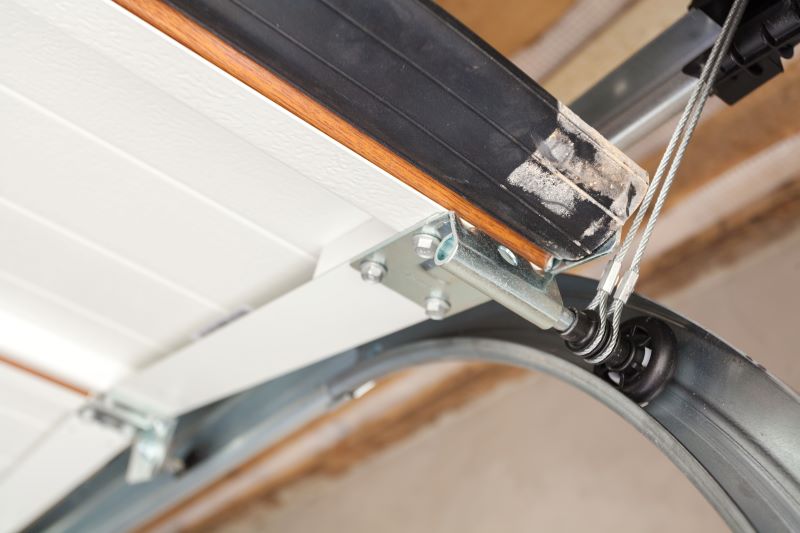
You may be wondering, should you lubricate garage door springs, cables, or hinges? The tracks, rollers, hinges and springs of your garage doors face significant stress and should need the most frequent lubrication.
In general, all moving parts (i.e. garage door springs, rollers, hinges etc.) will need lubrication often – every three months or possibly more with heavy use or in some climates.
The rails of your garage doors may need lubrication once a year but generally do not require much maintenance.
What Is the Best Lubricant or Grease for Garage Doors?
We often hear the question, “what should I use to lubricate my garage door?”. When it comes to how best to grease your garage doors, think light. Specially formulated products for Garage Doors or light silicon will provide the best results. While you may think of your garage door as heavy-duty, heavier products and grease for a garage door is a bad choice.
They may coat parts of the garage door which don’t need lubrication. A heavy coat of thick grease may attract dust and debris, which can actually cause more friction and can shorten the lifespan of your garage door.
There are products specifically formulated to grease your garage door. These are the best way to lubricate a garage door because they are designed not to attract debris.
The packaging also typically makes it easy to target lubricant right on the hinges, springs and other parts of the garage door without overspray. If you can’t find these products, use a light silicon aerosol spray.
Can I Use WD40 to Lubricate a Garage Door?
You may be tempted to spray WD40 on your garage door because it’s a common household lubricant. It is best not to do this. WD40 is a light household lubricant made up of mineral spirits, mineral oil and carbon dioxide. Unfortunately, this combination is not powerful enough for a garage door mechanism that lifts over a hundred pounds of metal and parts.
After about a week, WD40 leaves behind only a small layer of mineral oil, which is not enough to lubricate the rollers and other parts of a garage door.
The oil will not stand up to the elements your garage door is exposed to. WD40 is a product best used for greasing indoor squeaky doors.
Contact Us for Garage Door Tune-Up Services
If you have a garage door making grinding noises or not opening and closing correctly, you may not be able to tell whether the problem is lubrication or a more serious issue. When that’s the case, contact A Better Door Co., Inc. for maintenance, including garage door lubrication.
Our garage door technicians can ensure your doors are working correctly and stay that way. Since 1988, A Better Door Co., Inc. has been helping Long Island, NY homeowners enjoy reliable garage doors with our maintenance and tune-up services.
If you’re in Long Island, NY and you’re in need of garage door maintenance, give us a call at (631) 732-9654 to schedule a service appointment today!
How to Organize a Messy Garage: 5 Tips
Organizing a Messy Garage: 5 Tips and Tricks
When you open your garage door, a clean garage can be a source of pride. An organized space can also help you find everything you need and can even be safer.
You’re less likely to trip over things or have items fall on you or your car if everything is in its right place. A clean space is also less likely to hide pests and mold. But you may be asking yourself, how do you organize a messy garage? Read below to find out!
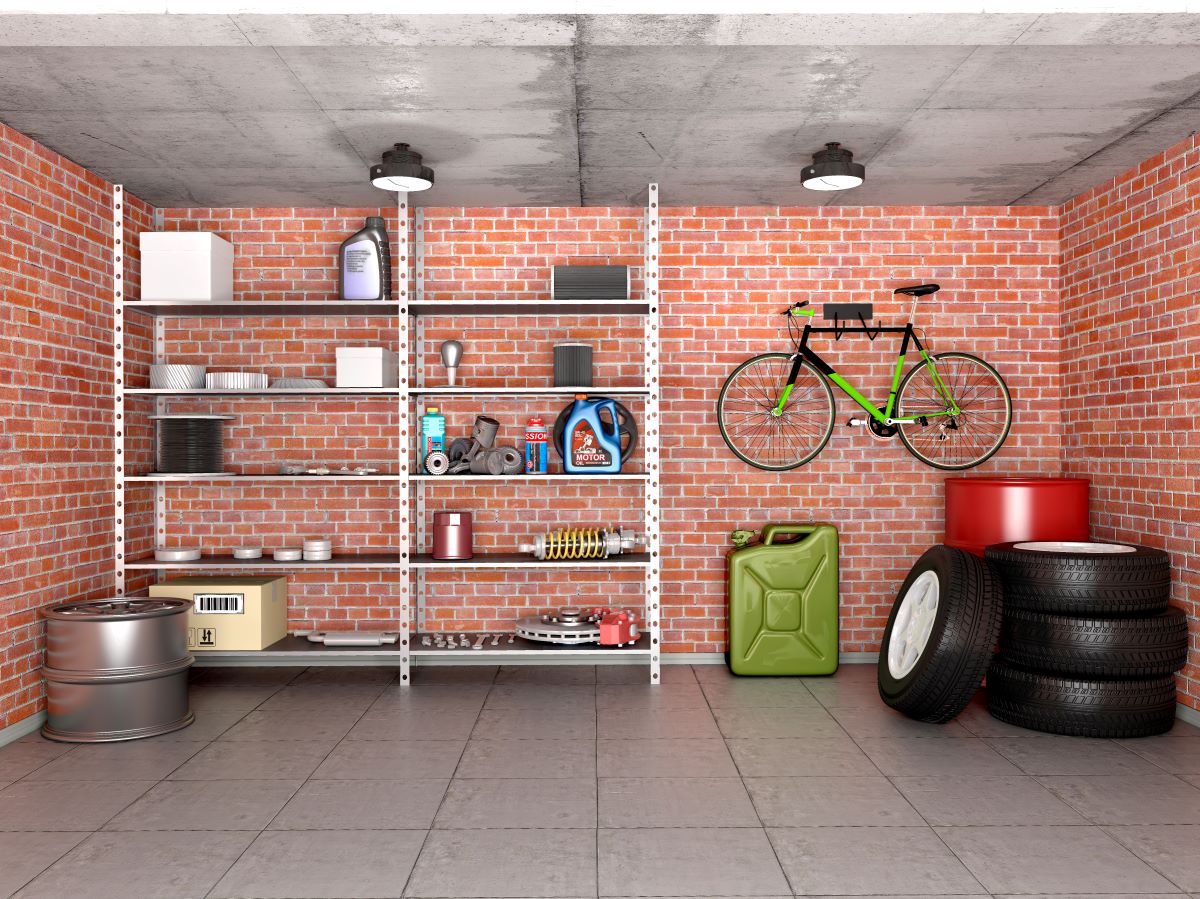
Whether or not you’re trying to fit a car or other items into your garage, these five quick and cheap garage organizing ideas can help you keep your space tidy.
1. Throw Away Items You No Longer Need or Use
One of the most effective garage organization tips and tricks won’t cost you a dime. Before you start to organize your garage, throw away what no longer serves you. This can be a huge task if you have years worth of stored items in your space. If you need to, tackle the garage over several weekends and focus on one area at a time.
2. Organize Items by Categories
One of the most effective ways to organize a messy garage. Not only will it look really clean and organized, but you’ll always be able to find what you need if you keep similar items together. Once you no longer have too much stuff because you’ve thrown out what you don’t need or use, designate areas of your garage for specific items. One corner may be for tools, for example, while another may house your sporting items.
3. Use Bins Wisely
Bins are one of the most affordable and effective garage storage solutions. Once you’ve grouped everything into categories, place related items in large plastic bins and label them. This makes everything organized and easy to find and can also protect your stuff from the elements when the garage door is open. Color-coded and neatly stacked bins also make your previously messy garage now functional, attractive and organized.
4. Create a Hanging Wall
One way to transform a messy garage into an organized garage is to start using vertical space. If you keep your car in your garage, a hanging wall leaves more space around your vehicle. If you don’t store your car in the garage, a hanging wall still leaves more usable space for a workshop area or just more storage room.
You can create your own hanging wall by using sturdy Command hooks. These hooks can hold everything from hammers and saws to fishing rods and bikes, and they don’t leave behind any nail holes or adhesive.
5. Consider a Larger Storage Container
If you have lots of items, a larger storage container can keep them out of sight and keep your garage streamlined. This is an ideal solution if you don’t need the extra space for a car in your garage. As an added bonus, some larger storage containers can be used as seating areas. The largest containers can even divide your garage into multiple “rooms,” creating a space for recreation and hobbies.
Once you’ve tackled the interior of your garage, do you want new garage doors to make the space even more functional and accessible? A Better Door Co., Inc. has many garage door options in abundant style variations.
How to Open a Frozen Garage Door
Finding your garage door frozen to the ground is a common problem during the winter months. There are several reasons that may cause this to happen.
One common cause is the buildup of snow and ice on the ground underneath the door. Long Island, NY averages between 20 and 35 inches of snow each year!
Another reason your garage door may become stuck is that the weather seals are worn and in need of replacement. Cold weather can also cause the metal components of garage doors to contract, which can result in misalignment in the tracks and other mechanical problems. In some situations, such as in the case of mechanical problems, you should consult your preferred garage door technician. That said, in many cases, you can safely free your garage door on your own.
If you find yourself in this situation, what can you do to get your door unstuck?
Five Tips for Getting Your Garage Door Unstuck From Ice
If your garage door becomes stuck on ice or snow, try these five tips to open it:
- Check the door for any obstructions or broken parts. If you see something that looks particularly damaged or unsafe, contact a professional.
- If you are able to get inside the garage and nothing looks amiss, pull the manual release cord to disengage the door from the opener. Then, if you are able, manually open and close the door a few times to dislodge frost and loosen any frozen sections.
- If you can’t open the door manually, you likely have ice buildup under or just outside the door. Try applying heat using a blow dryer or heat gun set on low and go over these icy sections, steadily moving the heat blower back and forth. If your garage is heated, that will also help provide some relief to a stuck door.
- If you don’t have a heat blower, try chipping away at the ice, pouring boiling water on the frozen areas or applying rock salt or hot salt. If you have time to wait, the door may thaw out on its own if temperatures are going to rise above freezing, or you can try using a space heater.
- If none of these tips work, contact a professional garage door service.
How to Prevent Your Garage Door From Freezing Shut
To prevent your garage door from getting frozen shut, take the following preventive measures:
- Clear the garage door area: Remove any snow and ice from around the door area on a regular basis so buildup does not occur.
- Replace the weather seal: Weather seals or weatherstripping can become cracked and worn over time, which allows water to accumulate and freeze.
- Apply a light Silicone Spray: You can help prevent sticking by applying a lubricant such as a silicon spray to the bottom of your garage door’s bottom seal.
- Install a garage heater: A heater is a simple solution for preventing any freezing in the garage, but it does create an added expense. There are gas and electrical heater options, and gas is usually cheaper than electric.
- Perform and schedule regular garage door maintenance: Regularly inspect the tracks, wheels and door for any obstructions, cracks or breaks and schedule maintenance appointments with the professionals.
Contact A Better Door Company For Preventive Maintenance
Contact A Better Door Company for your garage door preventative maintenance services. We are a family-owned company that has served Long Island for over 30 years.
We provide spring repair, cable repair, opener repair and weekend emergency repair as well as maintenance and installation services throughout Nassau and Suffolk counties.
Contact us online today for more information or give us call at (631) 732 -9654.
Garage Door Maintenance Tips
Are you a homeowner, property manager or caretaker on Long Island? Do you want to keep the home’s garage door in peak operating condition and avoid expensive repairs?
Regular garage door maintenance is essential for preserving the health of the door’s various parts, systems and components. While some maintenance steps are simple enough for do-it-yourselfers, you should also have a professional garage door service technician perform an inspection at least once a year. The tech can conduct a series of troubleshooting steps and make adjustments that can prevent significant problems and even extend the door’s lifespan.
Garage Door Maintenance Checklist
The items on any comprehensive garage door maintenance checklist should include:
- Lubrication: A garage door system contains a variety of moving parts such as rollers, hinges, tracks and chains. Applying a silicone spray or white lithium grease will lubricate these parts and components to keep them functioning smoothly. A well-lubricated garage door will also minimize the noise when opening and closing.
- Tighten the hardware: Your garage door’s roller brackets contain many nuts, bolts and screws that can loosen over time. Check and tighten these parts that connect the bracket to the rail and replace any broken or worn-out hardware.
- Check the balance: A balanced garage door will open and close smoothly and will hang at whatever level you choose to set it. An unbalanced door will work harder than usual and wear out more quickly. To test your door’s balance, disconnect the opener and manually raise or lower the door to the halfway point. If the door begins to ride up or fall, you’ll need a spring adjustment. Working with springs can be dangerous and requires the services of a trained garage door technician.
- Review the garage door tracks: Check the tracks around the door for signs of damage, such as cracks, bends or breaks. Remove any debris that could impede the door’s movement. Also, use a level to make sure the track is plumb.
- Test the auto-reverse mechanism: Auto-reverse is a vital safety feature that will cause a closing door to move upward when it senses that an object (or person) is in the way. To test it, place a block of wood or another object on the ground. If the door won’t close all the way and reverses direction when it senses the object, the mechanism is working how it should.
What Are the Benefits of Preventive Garage Door Maintenance?
The benefits of routine garage door maintenance include:
- Avoiding mechanical issues that can pose safety risks or make your home less secure
- Reducing your long-term ownership costs and increasing the door’s lifespan
- Increasing your home’s resale value and preventing problems with the door’s operation that can deter prospective buyers
- Preventing damage to vehicles or property caused by a malfunctioning door
- Receiving functional upgrades that can improve the performance of your door and make it safer
- Having the comfort of knowing you’ll be able to get your vehicle out of the garage every morning
Stay up to date on your the maintenance tasks in order to avoid garage door problems and safety hazards.
The professionals at A Better Door Co., Inc. can help you with your garage door maintenance needs on Long Island. Call us at (631)732-9654 or contact us online to learn more today.